
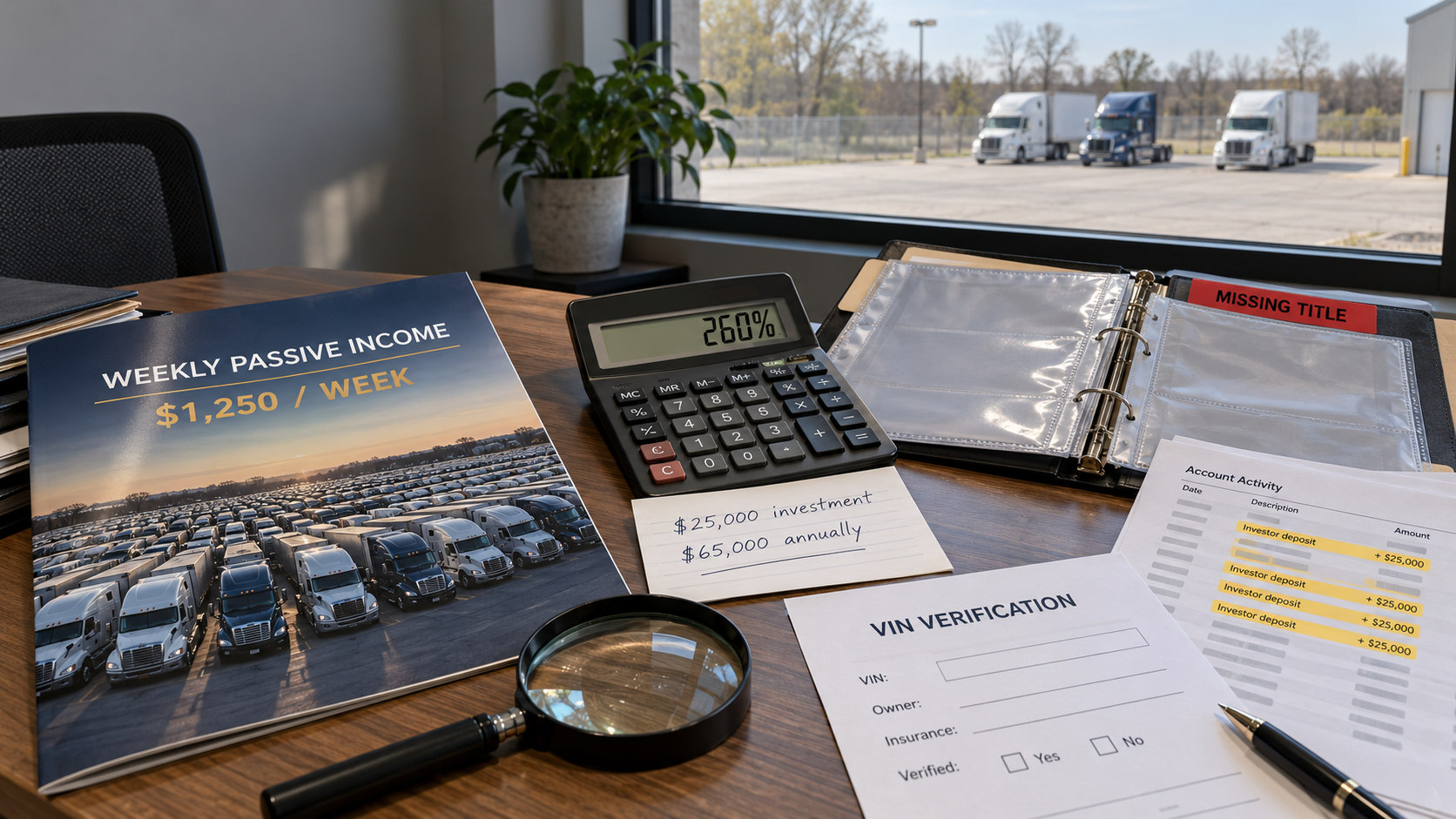
A weekly deposit of $1,250 would make a convincing sales pitch. Especially if you’d been told the money came from a semi-truck hauling freight while someone else handled the drivers, repairs, insurance and customers.
You put up the money. They did the work. Every week, you got paid.
I’d want to trace one of those deposits back to a freight customer. That would tell me more than a stack of testimonials from investors receiving their checks.
In this case, federal authorities allege that much of the money came from the next group of investors.
What the government says happened
A federal indictment announced in Florida on September 25 charged Kristopher Lunsford with six counts of wire fraud and two counts of money laundering.
According to prosecutors, Lunsford and others collected more than $105 million from hundreds of investors between approximately December 2023 and May 2025. About $75 million allegedly went toward paying earlier investors. More than $25 million went toward personal enrichment, prosecutors said, while roughly $2 million went to business expenses and operations.
A separate SEC case covers a longer period and alleges that Lunsford, AKL Transport and Southern Truck Leasing raised at least $127 million from approximately 765 investors. The agency says investors were offered $1,250 a week for five years and were led to believe the operation controlled about 2,000 trucks. According to the SEC, that fleet figure was materially overstated.
The criminal charges remain allegations, and Lunsford is presumed innocent unless proved guilty. In the SEC case, the defendants consented to proposed judgments without admitting the allegations, subject to court approval. The two cases describe different periods and transactions, which accounts for the different totals.
Start with one truck
The trucks gave investors something familiar to picture. We see them on the highway every day. We know businesses pay to move freight.
But owning a truck and making enough profit to pay an investor $1,250 every week are two different things.
Using the SEC’s figures, someone investing $25,000 was promised $65,000 a year in payments. Before accepting that, I’d want to work through an actual truck’s expenses.
How much freight revenue did it bring in? What went to the driver, fuel, insurance, repairs and financing? How many days was it out of service? What happened when there wasn’t a paying load for the return trip?
And after all of that, how much was left?
A fixed weekly payment needs a credible explanation when the business earning it has bills and revenue that change from week to week. “We handle everything” doesn’t explain the math.
Then find the truck in the records
If an investment is tied to a particular vehicle, get the VIN and establish who owns it. Check the title, liens and insurance. Look for maintenance records and evidence that it is actually hauling freight.
A photograph wouldn’t answer those questions. Neither would a visit to a yard full of trucks.
The records should connect: the vehicle on the title should match the vehicle on the insurance policy and dispatch records. The loads should connect to invoices, and customer payments should appear in the bank.
If the company claims a fleet of 2,000 trucks, checking one vehicle won’t establish the size of the operation. An independent reviewer needs to test that claim across the fleet.
I’d pay attention to how the company responds, too. There may be reasonable delays in producing records. But repeated excuses, changing ownership explanations or documents that never quite match leave important questions unanswered.
A payment history only gets you so far
It’s understandable that investors take comfort in getting paid. A friend says the deposits arrive every Friday. They show you their bank account. Maybe they’ve already recovered their original investment.
That establishes that they received money.
To find out whether the business earned it, you have to look at the company’s accounts. Did freight customers bring in enough cash to support the distributions after operating expenses? Or did the payments depend on fresh investor deposits?
That is the central allegation here. Prosecutors say money from newer investors was used to pay earlier ones.
You could receive every promised payment for months and still have no idea that was happening.
Before committing money to an arrangement like this, have an independent accountant examine the operating records and an attorney review the agreement, including what supports any guarantee. They should work for you and have access to enough information to test the claims.
If the seller won’t provide that access, you have a decision to make with information still missing.
The first document I’d ask for is a reconciliation showing how customer receipts funded investor payments. Then I’d check it against the bank statements.
That’s where I’d expect to find out whether the trucks were earning the money.
Source notes: U.S. Attorney’s Office criminal case announcement; SEC litigation release; SEC complaint
