
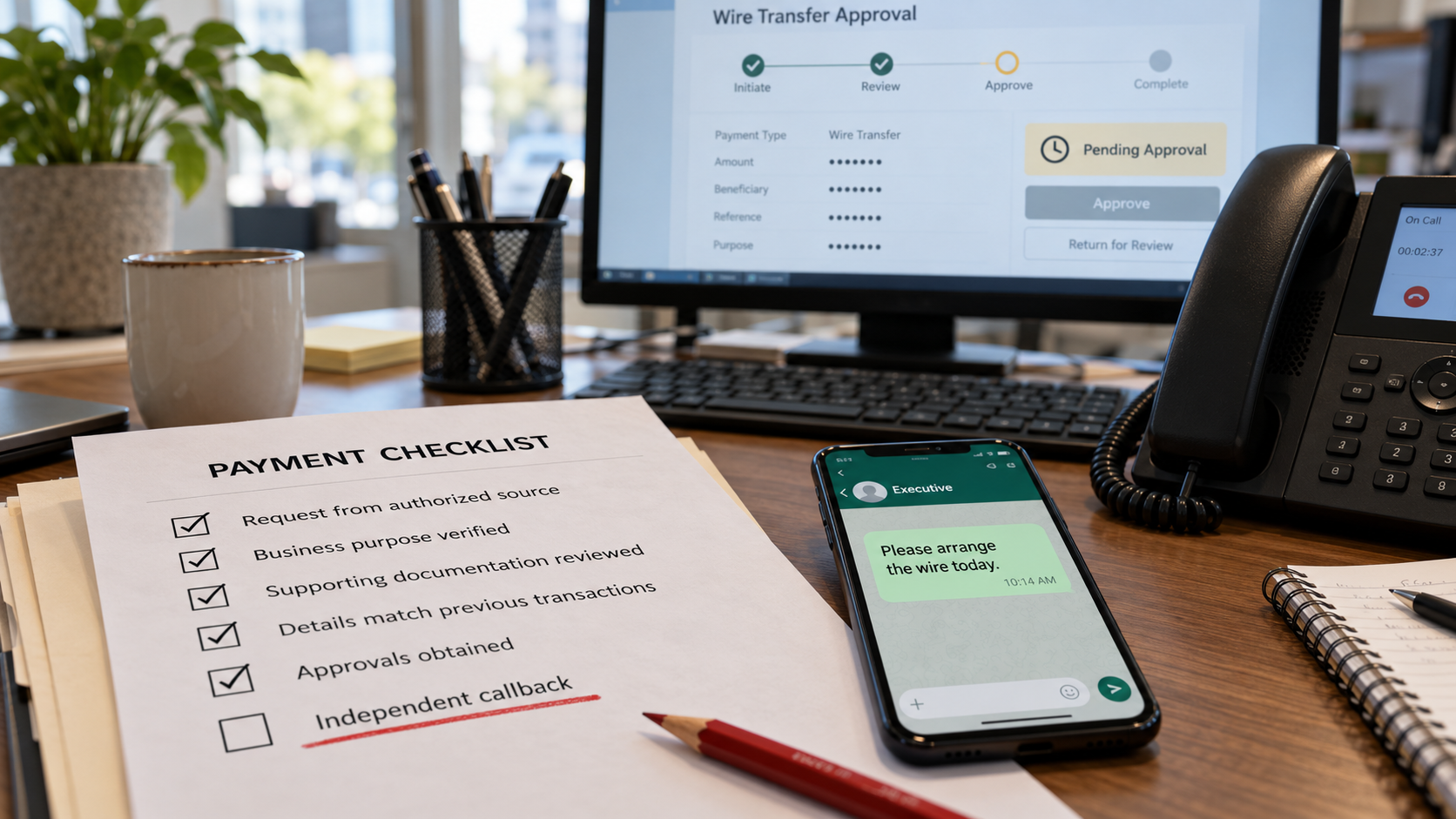
The chairman received a WhatsApp message that appeared to come from the CEO. An overseas transaction needed his help, urgently. Then someone posing as a senior lawyer called to confirm it.
According to Reuters, the caller used an AI-generated copy of the lawyer’s voice.
Paolo Molesini, then chairman of Fideuram, the private-banking arm of Italy’s Intesa Sanpaolo, directed the finance department to make the transfers. In all, €95 million went out, mainly to accounts in China and Hong Kong.
Reading that account, I’d want to reconstruct the confirmation call. Who supplied the lawyer’s number? Who placed the call? Did anyone contact the CEO through an existing number before releasing the money?
Those details would help establish how the request made it through.
The lawyer’s call needs a closer look
The WhatsApp message appeared to come from Intesa CEO Carlo Messina. That put the request high enough in the organization to get attention. The supposed lawyer then gave it another layer of credibility.
You can see how someone might take that call as confirmation. A lawyer is involved. The transaction is sensitive. The CEO needs it handled. The voice is familiar.
But where did the second person come from?
That’s what I’d ask when reviewing the payment records. If the person requesting the money also arranged the person “confirming” it, the verification needs more work. Two people telling the same story can be two participants in the same fraud.
The Reuters account says Fideuram spotted irregularities quickly. Authorities and banks in China, Portugal and Italy helped recover roughly €53 million. Some of the money had moved through overseas accounts and into cryptocurrency.
Neither Molesini nor other Fideuram executives were reported to be under investigation. Reuters reported that a foreign national was under investigation in Milan on suspicion of computer fraud.
What would have stopped your employee?
Put yourself in the finance department for a minute. Someone near the top of the company tells you to send money. They say the CEO requested it and a lawyer confirmed it.
Would your employee still need the usual approvals? Could they question the destination account? Would they feel comfortable calling the CEO?
Or would everyone assume the people above them had already checked?
That’s where I’d examine your procedure. It needs to work when a request comes from someone employees are reluctant to challenge.
An urgent transfer to a new recipient should require more documentation and review. The requester’s title shouldn’t settle the questions about where the money is going and why.
And a request to keep the transaction confidential shouldn’t prevent the people responsible for approving it from reviewing it.
Use the number you had before the request
If an unusual payment instruction arrives, end the incoming call and contact the person through details already on file. Don’t use a number included in the message or supplied by the caller.
Ask about the actual transaction: the amount, the recipient, the destination account and the business purpose. If a law firm is supposedly involved, contact it through an established number and confirm the lawyer’s involvement.
You’re checking whether those people authorized that particular payment. Recognizing a voice won’t answer that anymore.
For a smaller business, this might mean an employee calls the owner’s saved number before releasing a wire. A second approver then reviews the supporting documents and banking details. Ask the bank which controls it can enforce, including dual approval, transfer limits and alerts to another person.
Make the rule clear before anyone is under pressure. An employee shouldn’t have to decide whether stopping the owner’s urgent payment will get them in trouble.
If the transfer has gone out
Call the sending bank immediately. Explain that the payment may be fraudulent and ask it to pursue a recall and contact the receiving institution about freezing the funds.
Preserve the messages, phone numbers, call logs, payment instructions and approval records. Report the incident at IC3.gov and to law enforcement, and involve counsel and the insurer as appropriate.
Fideuram recovered a substantial amount after detecting the problem quickly. That doesn’t mean another business will get the same result. Give the bank the information as soon as you have reason to suspect something is wrong.
For now, walk through one scenario with whoever handles your payments: “You get a message from me asking for an urgent wire. A lawyer calls and says it’s legitimate. What do you do?”
Listen for how they would reach you independently. If they would simply trust the call, you’ve found something to fix.
Source notes: Reuters reporting republished by MarketScreener; FBI guidance on business email compromise; FBI warning on generative AI and financial fraud
